Jump to page: 2, 3, 4What I did in the '60s and later
Hippies
were the primary social group behind the 1960s cultural
revolution in America, which is also called the 1960s
youth revolution. But in Continental Europe, it's
sometimes associated with the 1970s cultural revolution.
Two different spellings of "hippie" are used on
this site i.e. the word "hippie" is also
spelled "hippy". The spelling "hippy"
is older, and it's rarely used, now. It was used in the
1960s as a noun refering to original hippies or old
hippies. The most popular spelling today is
"hippie", and it's used both as a verb and a
noun in reference to all hippies.
The hippie movement was a peace and love movement at a
time when families in the U.S. gathered in their
living-rooms to watch cowboy movies on TV. It was a time
of the Cold War, a nuclear threat, equal rights movement,
sexual revolution, assassinations of the Kennedy
brothers, Malcolm X, and Martin Luther King Jr., and the
Vietnam War.
So, why from among 2% of American youth did I become a
hippie? In the beginning, I didn't know that I was a
hippie until someone called me a hippie.
But like, before I groove on... I hope you dig this
far-out blog vibe and cosmic Web art, and don’t trip on
the author’s chill literary skills. This is more of a
personal space, not a traditional book, you know? So,
it’s all casual, bloggy, and like laid-back, if you
know what I mean, man.
In other
words:
But before I go on... Hope you'll find this form of
avant-garde blog style literature and Web art
interesting, and that you won't mind the author's lack of
formal literary skills. This is a personal website; not a
book, in the formal meaning of the world. Hence, the
informal, Blog style character, and unsuphisticated,
colloquial language.
So, to continue... I don't know why I became a hippy
because I never really became one. It was just the way I
was that defined me as a hippy. The main reason was
probably because I was born in the middle of the 20th
Century, at the beginning of the Atomic Age, and I was
into Folk music, Jazz music, Blues music and also a
Beatles and Rolling Stones fan. So, it was like the Karma
of those times that turned a percentage of young people
like me toward the peace movement, anti-nuke movement and
sexual revolution, all of which were at the core of the
hippie movement.
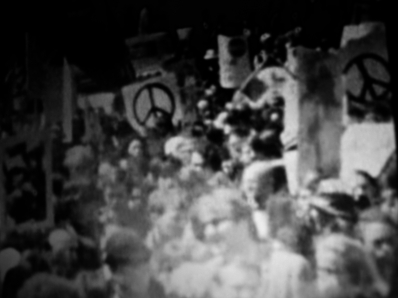
The oldest symbol associated with hippies is the peace
sign. Even today, the peace sign is widely associated
with the peace movement, human rights, and with hippies.
It's one of those few signs that has retained its
original symbolism. The Peace sign was used for the first
time at anti-nuclear demonstrations in England. It was
created in 1958 by Gerald Holtom for the Campaign for
Nuclear Disarmament (CND) in England, and quickly caught on
among peace activists and hippies.
Peace sign
Today,
few are aware that only about 2% of American youth joined
the hippie movement and that it wasn't such a mass
movement before the Woodstock
1969 festival. I
never chose to become a hippie. I was called a hippie by
others, and got my hippie name "The Polish
Hippy" from a Belgium friend in school. That
occurred before the production of the movie Hair, in which one of the main
characters had that same hippie name. But I became most
widely recognized as a hippie after I was taken to a
barbershop by the school Principle/ Director and given a
hair cut. That hippie name stayed with me until the end
of the 1960s or even the mid-1970s. In 1968, I even
managed to write two articles about hippies for my
school's press, and played my own music on guitar on
stage in a folk music Coffeehouse. So, I was a like of a
small time celebrity for a while.
Since then, other hippies have adopted that name on both
continents; especially if they were of Polish ancestry.
It's a unique name in that it refers to a specific
nationality. The name spread through some 1960s media
productions for some time; until that name was later
removed in response to protests from the Polish Embassy
in Washington, who took it as another insult to the
Polish people, which I could never understand.
I like to call those early hippie days "the pure
days". As I mentioned earlier, I was a Beatles and
Stones fan, a fan of American folk music, Blues music, Allen
Ginsberg, Beat
writers, abstract avant-garde art and psychedelic art,
among other things. I suppose many Beatles fans began
like I did, after the Beatles first appearance on the Ed
Sullivan Show in 1964, and by other British bands such as
the Rolling Stones. The British music played by the
Beatles, Rolling Stones, Animals, Led Zeppelin and other
bands was largely a transformation of Afro-American
music. But those British artists also brought other, new
fashions and music influences for example from India to
America. So, they opened our minds on the world.
The main fashion that distinguished boys, who were
Beatles fans was long hair styles and high heel boots,
which replaces our traditional, low heal shoes, for a
while. The artists from Great Britain looked like spoiled
boys from good British homes. So, the British fashions
were a bit snobbish, and they were called were called Mod Fashions. They were lush, colorful,
abstract and stood out in contrast to the toned down and
conservative fashions of those days. And it wasn't until
the 1960s that the bikini, and "Swedish" movies
caught on in America, which symbolized a sexual
revolution.
Mod fashions from London gave rise to a more budget
friendly and casual hippie style called the hippie look.
Towards the end of the 1960s, Bell-bottoms were
introduced in California by a fashion designer. Today,
they are widely associated with hippies, and 1970s Disco
culture.
So, one thing in Britain led to another in America, and
other things were added on top of that. Thus, a hippie
was born. The hippie movement was a pacifist movement at
a time when most Americans were brought up on cowboy
movies, wore neatly cut short hair, crew-cuts and used
lots of brilliantine (Vitalis) to keep their hair in
place. Hippies were a small minority in those days.
Perhaps the exotic hippie worldviews and Bohemian type
lifestyle didn't appeal to most hard working Americans.
When I was a kid, I remembered seeing students with
longer hair, sandals, guitars and bongos on trips across
Europe and America with my family; especially around
university campuses. Many of those were beatniks and
hipsters that preceded hippies. Many people identified
with ideas spread by anti-Vietnam War and human rights
movements. The hippie movement was so strongly connected
with those that it ended almost at the same time that the
Vietnam War ended; though many of us continued to remain
hippies at heart...
The hippie movement started in America but incorporated
many ideas from other places and cultures. Hippies formed
an informal political movement, and have been recognized
as social reformists that changed the world. Many of
those achievements are now taken for granted. As hippie
ideas spread around the world, hippies became identified
with different things in different parts of the globe.
Unfortunatily, not all of those were as positive as those
in the USA. European hippies were often involved in
different issues then American hippies. For example, they
didn't have to deal with the Vietnam War or the draft.
They also traveled around the world a lot more, esp. to
Asia and the Indian subcontinent, for example.
I was brought up in a cosmopolitan European family. An
average American was not so cosmopolitan as we were. My
Parents spoke Polish, German, Czech, English, and Latin.
That was not too common among most Americans. My Dad was
an businessman and a professional artist. Some members of
my family were imprisoned in Auschwitz Nazi concentration
camp. Those and many other things had a great influence
on my worldviews. So the life experiences and worldviews
I was exposed to were different from those of most
Americans. Hence, it was inevitable that I would support
the peace movement and become a hippy because it was the
only movement that shared ideas that were dear to me.
Beatniks, 1940s hipsters and hippies were urban
subcultures that are strongly connected. They also are a
continuation of the European libertine culture, Wandervogles and bohemian scene. Hippies were most often young people from middle
or upper class homes. But hippies weren't the only ones
that wore long hair in the 1960s. There were other groups
that wore long hair. Some of those were for example
members of motorcycle clubs, vagabonds and beggars. And
those were often mistaken for hippies. There were also
earlier subculture groups such as Nature Boys, better
known in pre-War Europe as Lebensreform that had an enormous influence
on hippies. Furthermore, I was brought up on the spirit
of the Lebensreform movement, which had many followers
through out Europe and there were also some in America.
Hence, probably another reason why I was labeled "a
hippie".
Young and old hippies still are involved in issues such
as ecology, Peace, music, art, poetry, Internet
technologies, social and political reforms, and many
other things. Hippies are important social reformers. Allen
Ginsberg and the
Beats were also such reformers. Unlike some folks who may
call themselves hippies, a true hippy would not own a gun
or shoot an animal. Real hippies are Earth loving and
peace loving people. Hippies lived the way they did
because it was an alternative lifestyle to the mainstream
model that was focused mainly on consumption, competition
and topping others i.e. "keeping up with the
Joneses". Today, many identify hippies with drugs,
bubble baths, slacking and going to concerts. Much of
that is true. But that's not the way it teally was.
Hippies also drank wine and there were even some that
didn't take bubble baths, who didn't take drugs and who
didn't wear long hair.
From an old photo.
Chicago 1967
The Blues Brothers
at Calumet Harbor.
95th Street Bridge
on Calumet River
I was camera shy in the 1960s. That's probably why I
have just a few photos from those days. And none
from Led Zeppelin, Johnny Winter, Savoy Brown,
Jethrol Tull and other concerts at the Fillmore
or Grant Park in Chicago. Photos from a Jefferson
Airplane concert in Grant Park are further down
the page or in the 1960s album. I don't have any
from Anti-War marches and
demonstrations that were held in Chicago. But who
took cameras to those kind of events in those
days? So, I feel lucky to have the few I have. Chicago’s
Old Town
was the Midwest's 1960s hippie Mecca. It wasn't
just a neighborhood but a state of mind. The Old
Town neighborhood is centered around North and
Wells Streets on the Near North Side. It has
changed a lot since the sixties. Many may
remember it for the Old
Town School of Folk Music, Piper's Alley, 1960s
folk music clubs such as Like Young, Earl Of Old
Town, boutiques such as The Man At Ease,
headshops, The Secondhand Rose, bookstores, cafes
and the Second City Theatre at 1616 N. Wells that
gave us the definitive Saturday
Night Live cast, the Blues
Brothers
and Mike
Myers
aka. Wayn's
World
and Austin
Powers.
I believe Mike Myers well captures the Chicago
area Rock spirit of mid 1970-80s in the Wayn's
World series, and Mod fashions era in his Austin
Powers movie series.
Mike Myers in Wayn's World and Austin Powers series movies
Old Town was also where an illegal
back-house tavern operated on Wells Street
through the 1970-80s called The
Blues Brothers Bar that was started by John Belushi
and Dan Aykroyd, who became better known from the
1980 Blues Brothers movies.
Old Town was a place where one could come across
many artists, writers, beatniks, flower
children,
folk musicians, hipsters, actors, groovy shops
with black lights, dayglow posters, incense,
rubber peace stamps, hippie beads, goods from
India, water pipes, rolling papers and lots of
other hippie paraphernalia.
I
remember Old Town best for the parties, Piper’s Alley,
Folk Music Cafes that I couldn't afford to visit too
often at that time, and Lincoln Park where hippies used to gathered
on various occasions. There was also a lot going on at
the University of
Chicago Campus,
The Coffeehouse on 54th Street in Hyde Park near the Museum of
Science and Industry and also in Grant Park. But that would be
another story..
But I grew up on the South East Side of Chicago, in a
working class neighborhood, not far from where The Memorial
Day massacre of 1937 took place at a steel mill on Burley
Avenue. It was an event, in which many demonstrators were
brutally beaten and shot dead by the Chicago Police. That
was also a keystone event for the labor movement. It
inspired any artists such as Woody Guthrie and Pete Seeger, who became involved in the
labor movement. Artists such as Bob Dylan, Donovan and
many others continued that mission through their works.
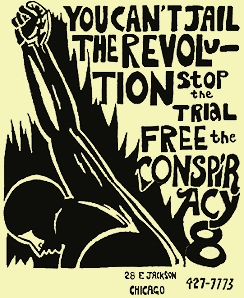
The demonstrations at the 1968
Democratic National Convention began in Grant Part. They were also met with brutal
Chicago Police force on orders of Mayer Richard
J. Daley. That
was followed by the trial of the Chicago Seven and gave birth to the Yippie Movement which was initiated by Abbie Hoffman in Chicago. My neighborhood was
also the last place Mayer Richard J. Daley payed an
official visit to on the day he died.
After
the U.S. backed out of the Vietnam War, hippies lost
their main cause and went their own separate ways. Some
joind various other causes such as ecology, gay rights, civil rights, women's rights
etc. Some turned on to the Glam Rock or Glitter Rock scene that was forming in New
York, also the underground Disco Music scene of the early 1970s esp. in Chicago. Disco music grew around Motown and Soul music, which were very popular
during the hippie era. But its characteristic rhythm and
beat came from the classic soul/disco song by Harold
Melvin and the Blue Notes called "The Love I
Lost" and
others such as "Love Boat" by Earl Young from
Philadelphia in the late 1960s. The disco scene was gay,
colorful and psychedelic. Chicago developed its own disco
music style that is called House Music, and which spread to discos in
Detroit and New York. House Music also influenced
European Techno music; especially became popular in
Amsterdam and in Berlin.
The early 1970s was a happier time when hippies achieved
many of their goals. That's why I believe the 1970s was a
time of celebration, dancing and overindulging. Just as
the hippies scene approached its end, I got introduced to
a different type of music scene by a friend from a
younger generation; mainly to David Bowie, Elton John and
to Disco music.
The early Disco music scene was interesting because it
was colorful, happy, united Afro-Americans, Latinos, gays
and others from a diverse cultural backgrounds. In the
beginning it was a movement that started in underground
clubs and bars often located in or near former hippie
centers of Chicago, New York and San Francisco.
One of such early Chicago discos was Dugan's Bistro also
called Bistro Chicago at 420 N. Dearborn Street. Other
clubs like that opened around what is now known as the
Boystown neighborhood. Disco clubs and bars also opened
in Chicago's Old Town on Wells Street near Schiller Str.
So, one could say that "Sex, drugs and Rock &
Roll" of the 1960s was replaced with "Sex,
drugs and Disco" in the 1970s.
The
Disco music scene didn't last for long; especially after
Hollywood movies popularized it among the mainstream. It
literally burned itself out just before the dawn of the 1980s when disco records were burned at the
home of the Chicago White Sox baseball team in Comiskey
Park on July 12, 1979.
The Disco Demolition Night was organized by a Chicago
radio DJ. Though similar events were held elsewhere
against Rock & Roll music in the 1950s, and The
Beatles' vinyl records in 1960s, none had the impact the
Disco Demolition Night had on disco music. And in spite
of all those - the free spirit of the 1950s Rock-N-Roll,
1960-70s hippies and peace and liberation movements
continued to rock on into the 1980s. The free spirit of
the hippies gave rise to Punk music, and Punk music
opened the door for Nirvana, who opened the doors for
bands like Offspring. That's more or less how things
evolved till at least the end of 2000s.
The 1980s was a bleak decade marked by the spread of the
HIV virus, economic problems, oil crises, unemployment
and other issues. Not until the 1990s did I realize how important the hippie
movement was for the formation of modern music, art,
lifestyles, worldviews, technologies, ecological
awareness and spiritual development. That's also when I
became encouraged to create this Web site...
Here is a well written and very
informative article from 1967 that was published in The
Atlantic, which shows a different side of the Flower
Children in San Francisco, and the various social
complexities involved.
Many hippies were runaways attracted to the bay area
through media publications and music. So, one can't
expect anyone who's without an income or a home to dress
in clean clothes or Mod fashions from trendy boutiques.
There were many efforts made to help hippies with things
like free food, clothes, medical care etc. But those were
not enough to meet the needs of most hippies because they
were not available everywhere.
What I call the "pure hippie years" were just a
few years in America before the hippie movement reached
its peak in 1969. After that, followed a decline of the
pure hippie years as millions wanted to join the new fad.
What lasted just a few groovy years had an enormous
affect on many decades that followed; if not for
centuries. It was a time when the great creative force
that lays dormant at the base of everyone's deepest
existence was unleashed. A rare time in human history
that rarely occurs.
Though it's easier said then done, my advise is, if you
have a good thing going then don't over advertise it,
don't flaunt it and don't make Hollywood type movies
about it; unless if there are some vital issues involved
that are crying out for change.
My friends at a Jefferson Airplane Concert in Grant Park, 1969.
Later next year, some of those friends went to Woodstock in an old Cadillac hertz
that was shown in the Woodstock 1969 Movie.


My Cousins had a great basement band in Milwaukee, Wisconsin, 1965.
The were the warm up band for The Rolling Stones' Concert in Milwaukee.
They also showed them around town in their red Thunderbird convertable.
Me and an old hippy friend from Chicago's Old Town and Near North Side, 1974.
Some photos from my 1969 trip
from Montreal to the Old Continent.
I
I took this photo on the Atlantic Ocean in 1970 on my way back to Montreal, Canada
In
the summer of 1969, I traveled to Europe by sea and
stayed there for about half a year. That experience
helped me become more cosmopolitan as it opened my eyes
on a totally different type of reality. But I missed a
chance to go to the Woodstock Festival with my friends
from Chicago that wanted me to go there with them in
their used Cadillac Flower Car, which I think I saw in a
Woodstock documentary film. So, I missed the 3 days of
sliding in the mud and all of those great people and
music. Who would have guessed at that time that it would
turn out to be such an important and historic event? Even
the organizers expected no more then 50,000 people to
show up at the Woodstock Music and Art Fair in August
1969. Surprisingly, 400,000 people showed up, and the
Festival turned out to be the most successful one of all
time. But if not for the royalties from documentary films
that the organizers received, the Festival was a total
financial disaster; artists had to be paid in advance and
bills had to be paid...
But I spent that historic summer traveling instead. I
went to Canada, England, Denmark, Poland, and The
Netherlands (Holland). Read about The Netherlands here. That trip was very educational
and opened my mind in many ways. It certainly wasn't a
pleasure ride because I was running from the draft, was
broke most of the time, far away from my family, and home
in Chicago. The worst experience I had gone through was
in Poland, behind the Iron Curtain where I was kept on
the border for hours, had my luggage searched and had
many of my personal belongings confiscated by a crooked
Customs Officer. That first experience was shocking for
me, and made a negative impression of Poland for me,
which lasted for many years. After all that, I was made
to pay a ridiculous costumes tax on my vinyl records and
clothes, which they allowed me to bring into their
fricken communist country. All this probably because the
officer found a Peace button, a round rubber stamp with a
Peace sign, and some Zig-Zag rolling papers in my
luggage. Fortunately, the rolling papers, my beads from
India, and an original roach clip were not confiscated,
and I still have them. I've kept them so long because
they remind me of those old hippie days, and of Chicago's
Old Town where I bought them in head shops.
It was a year after a wave of 1968 student
protests in
Japan, Germany, France, America and across the world. It
was also a year after the January, and March 1968 student
protests in Poland, which I didn't know about, at that time.
So, I wasn't aware of what I was getting into. But I
didn't find hippies in Poland; though it was one of the
countries that Allen
Ginsberg used to
visit; especially after he was kicked out of Russia
because of his gay affair with a young Russian. But many
years later, on another visit to that country I met some
people in Poland, who knew Allen Ginsberg. I even saw him
once sitting in an outside cafe at the Warsaw Old Town
square, where I was staying in the 1990s. So, that was
really groovy, man.
Life behind the Iron Curtain was like stepping into a
time-warp and traveling decades back in time. But in
spite of the initial bad experiences, life there wasn't
as bad as most people believed. It certainly was very
budget friendly and relatively safe. I'd be unable to
compare it to any place in the world other then India, if
you know what I mean. But this was in the center of
Europe, and a great place to kick back, to do Yoga,
meditate, taste some vodka and repair the condition, in
which my condition was in.
By the time I arrived in Poland, I had developed a
serious case of anemia and heart arrhythmia probably due
to stress and a bad diet. But that's another story... The
good news is that I was as good as new after just a few
months.
I was also subjected to a mass of communist propaganda
while I was there, which gave me an opportunity to
learned a bit about Marxism. I found that it had nothing to do with
the Marx Brothers or Marks & Spencer. But best
thing was that my modest budget went a long way behind
the Iron Curtain, which was very important no matter what
ideology one follows.
Thought I adhere to socialism such as they have in
Scandinavia, Germany or The Netherlands, I never
sympathized with communism because freedom is my
religion. But freedom too has its limits. That's why
hippies have always been against oppression, dictators,
violence, war, aggression, hurting others, dishonesty and
things like that. Hope you understand what I mean...
Here's a piece of music I recorded
inspired by those times.
A photo of a street in London 1970
As
I mentioned earlier, I'm against communism but for
socialism as in many countries in the European Union and
elsewhere. I've learned enough about Karol Marx to
understand that he too would have been against communism
that we have seen in the world. There is a world of
difference between communism and socialism. Generally
speaking, all of modern-day Europe is socialistic, and
sooner or later the USA will also have to become more
socialistic for humanitarian reasons. On the down side,
it is a costly social system that not all countries can
afford.
Just like democracy, socialism is not a new system. It's
been around in one form or another since ancient times.
But Marx was the man, who reinvented socialism for the
industrial era, and wrote extensively about it. He was a
romantic, who believed that the working class should have
social benefits and more time to enjoy music, art and
culture. And he certainly lived well enough in England to
do all those.
Marx was greatly influenced by Adam Smith, a well known 19-century
Scottish Economist. Marx believed in globalization and
that socialism was for highly developed, highly
industrialized capitalist countries. He did not recommend
socialism for developing countries of his times such as
China, Poland or India, just to name a few. That is
probably why it failed so badly behind the Iron Curtain
in the 20th century. On the other hand, socialism is now
widespread; especially throughout the European Union, in
countries such as Germany, The Netherlands (Holland),
England, Denmark, Finland, Norway, Sweden, and others.
But what they had behind the Iron Curtain was not
socialism but communism.
So, please do not confuse socialism with communism. And
remember that there are no perfect social and political
systems in the world because people and the things that
we make are not perfect. But we always strive for some
level of self-improvement, and the improvement of the
things that we created, and aim for perfection.
Yes, the 1960-80s altered the course of
all our lives forever...
On a tram stop at Al. Jerozolimskie & Nowy Swiat
in Warsaw, Poland 1969


A residential street in London 1970
A monument I saw in Rotterdam,
Netherlands 1970
Copenhagen, Denmark 1970
Faded old photo from Budapest, Hungary
Faded old photo from Budapest, Hungary
One of the other American guys
I crossed the Atlantic Ocean with
The
Peace Movement was over by the mid 1970s, underground FM
radio stations turned into mainstream commercial
stations, head shops closed, and so called hippie
neighborhoods turned into popular tourist traps. The War
was over. Lennon got married, the Beatles broke up, and
the 1960s Peace Movement was over. Many hippies returned
home, graduated, got jobs, married, joined political
parties, climbed up the social ranks of the decked out
world, became successful, joined the Rotary Club, became
the establishment and turned into Yuppies (Young Urban Professionals), and as
Donovan used to sing "hippies are going to make it
rich..." some became billionaires. But not all
became rich and successful. Though many of us may not
look like hippies any more, many of us remain hippies at
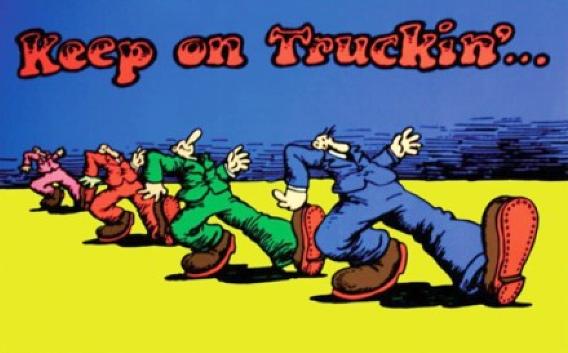
heart. So, keep on
truckin'
hippies... and keep the faith...
So, the lesson here was that everything, no matter how
original and seemingly uninfluenced, has its roots
somewhere, in other things that often were more
rudimentary, and often improvised in the past. In other
words, what we call "reality" is an expansion
of consciousness over the space of many generations in
time. As we've grown more technologically advanced, we've
become dependent on technology and grown more ignorant of
the many basic things that were obvious to our ancestors.
We don't need stone circles and their magi to tell us
what time it is or what season it is, or what tomorrow's
weather may be like etc., for example. Everybody
these-days is an expert in telling time. We understand
many complex things that would amaze the most learned
ancients. But on the other hand, we are often ignorant of
the many basic things that were obvious to them. That's
why so many seek ancient wisdom and have a need to get
back "down to earth" for at least a while. And
the hippie movement offers such a chance for urban
hippies to experience life in closer harmony with nature
and the natural rhythm of life.
Peace
Family friend at Pipers Alley in Chicago's Old Town, 1968
Family friends at Pipers Alley in Chicago's Old Town 1968
1976
On the next pages are some photos that were altered for a psychedelic effect.
On page 4 are a few words about '60s fashions, and a link to my '60s photo album.





 Jump to page:
  What I did in the '60s and later
 Peace sign


 Mike Myers in Wayn's World and Austin Powers series movies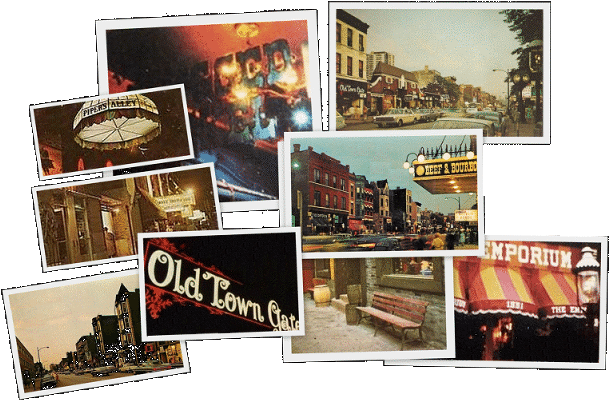

 Click
Click  My friends at a Jefferson Airplane Concert in Grant Park, 1969.
Later next year, some of those friends went to Woodstock in an old Cadillac hertz
that was shown in the Woodstock 1969 Movie.
My friends at a Jefferson Airplane Concert in Grant Park, 1969.
Later next year, some of those friends went to Woodstock in an old Cadillac hertz
that was shown in the Woodstock 1969 Movie.
 My Cousins had a great basement band in Milwaukee, Wisconsin, 1965.
The were the warm up band for The Rolling Stones' Concert in Milwaukee.
They also showed them around town in their red Thunderbird convertable.
My Cousins had a great basement band in Milwaukee, Wisconsin, 1965.
The were the warm up band for The Rolling Stones' Concert in Milwaukee.
They also showed them around town in their red Thunderbird convertable.  Me and an old hippy friend from Chicago's Old Town and Near North Side, 1974.
 I took this photo on the Atlantic Ocean in 1970 on my way back to Montreal, Canada
 A photo of a street in London 1970
 On a tram stop at Al. Jerozolimskie & Nowy Swiat
in Warsaw, Poland 1969
On a tram stop at Al. Jerozolimskie & Nowy Swiat
in Warsaw, Poland 1969
 A residential street in London 1970
  A monument I saw in Rotterdam,
Netherlands 1970
A monument I saw in Rotterdam,
Netherlands 1970 Copenhagen, Denmark 1970
 Faded old photo from Budapest, Hungary
 Faded old photo from Budapest, Hungary
 One of the other American guys
I crossed the Atlantic Ocean with
One of the other American guys
I crossed the Atlantic Ocean with On a ship entering Montreal,
Canada 1970
On a ship entering Montreal,
Canada 1970 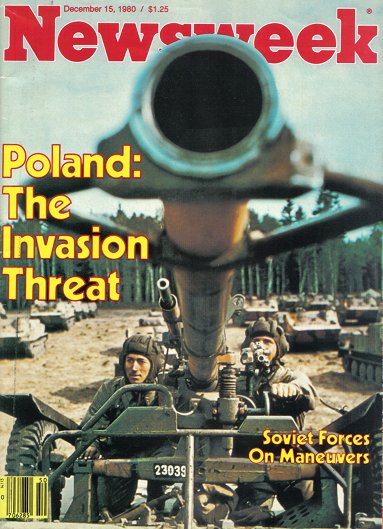 Cover of Newsweek, December 15, 1980
The
Cover of Newsweek, December 15, 1980
The 


 Family friend at Pipers Alley in Chicago's Old Town, 1968

 Family friends at Pipers Alley in Chicago's Old Town 1968
 1976
1976


